
The PACCAR MX P0261 fault manual is the official 2013 diagnostic service document published by PACCAR for troubleshooting voltage and short-circuit faults in common rail pump unit 1. This comprehensive guide covers the D420 ECU pin A25 circuit, pump operation, control systems, and step-by-step electrical diagnostics for mechanics and workshop technicians.
Document details and specifications
| Brand | PACCAR |
| Model coverage | PACCAR MX Engines (EPA2013) |
| System/Group | DTCs / MX Engines |
| Publication number | P0261 |
| Year/Revision | 2013 |
| Pages | 5 |
| File size | 0.4 MB |
| Format | |
| Language | English |
Table of contents
- Fault code P0261 number and description
- Fault code information (trip count, recovery cycles, readiness group)
- Component description and pump operation
- Control system and rail pressure adjustment
- Component location
- Diagnostic conditions and set/reset criteria
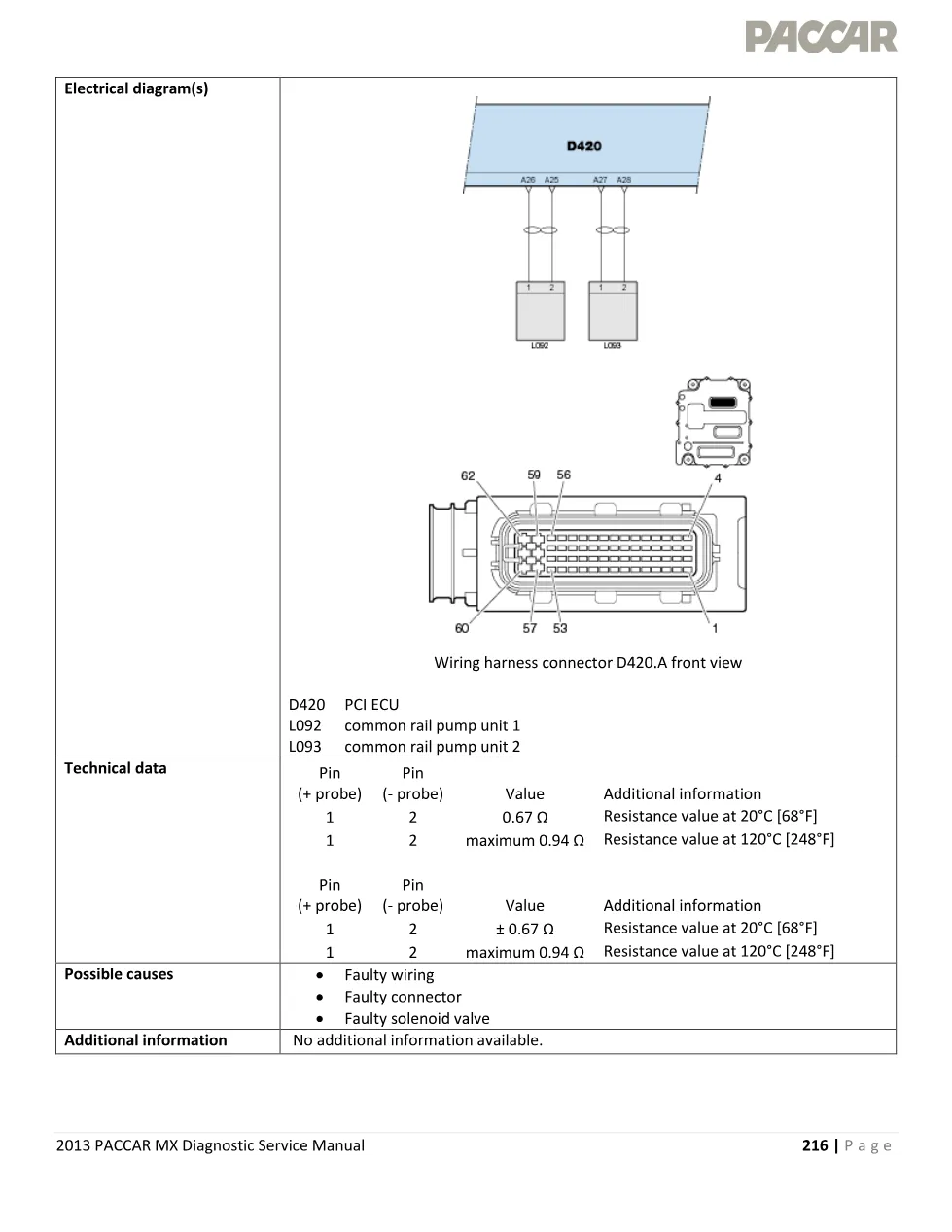
- Electrical diagram and wiring harness connector D420
- Technical data and resistance values
- Possible causes
- Step-by-step diagnostic procedure (Steps 1–6)
- Verification and drive cycle validation
What is the PACCAR MX P0261 fault?
Code P0261 indicates “Common rail pump unit 1 – Voltage too low or short circuit to ground on ECU D420 pin A25.” The fault triggers the malfunction indicator lamp (MIL) on the first trip and requires 3 drive cycles to recover. This code involves the solenoid valve control circuit that regulates fuel pump events and rail pressure in PACCAR MX engines complying with EPA2013 emissions standards.
How the common rail pump system works
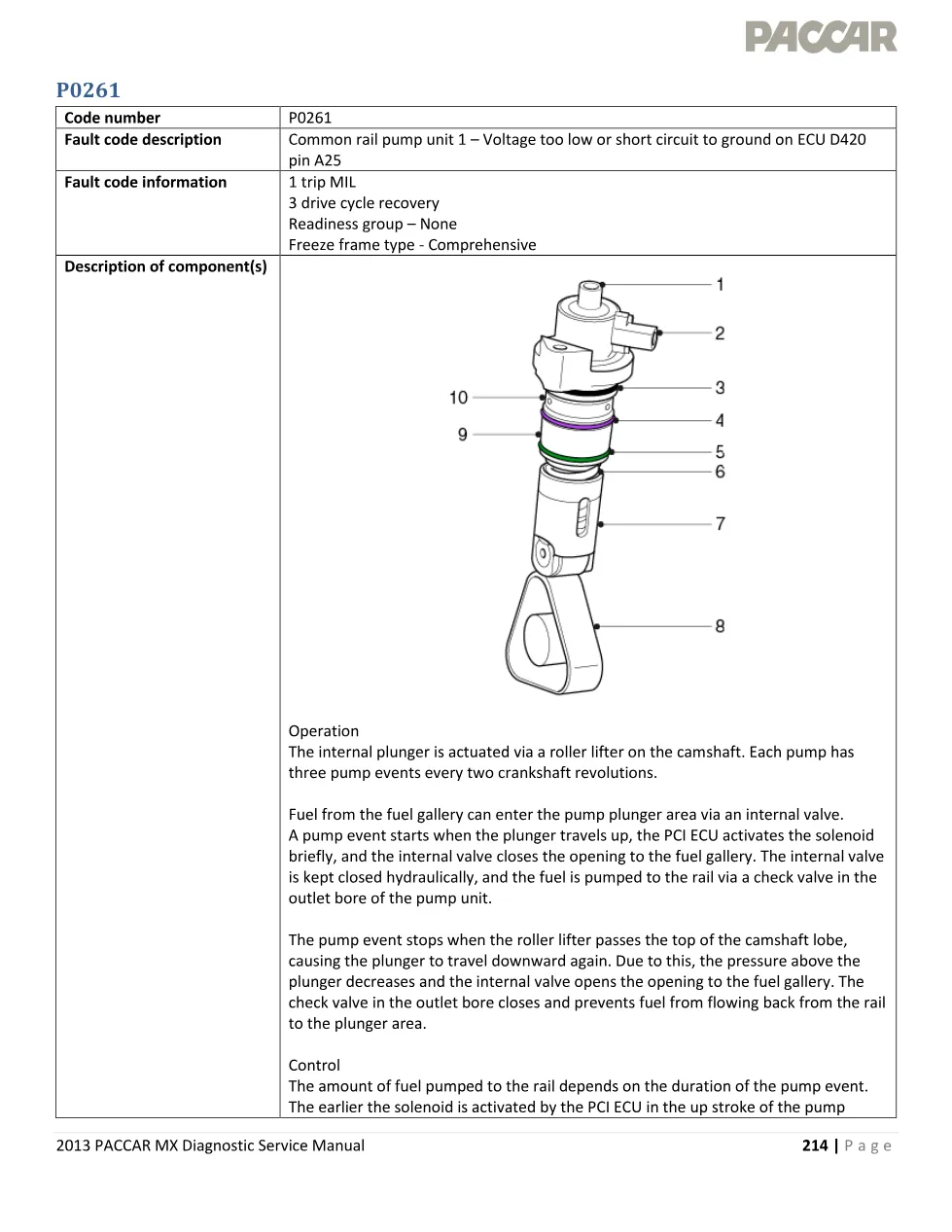
The common rail pump unit 1 uses a camshaft-driven internal plunger actuated via a roller lifter. During each pump event, the PCI ECU activates the solenoid briefly to close an internal valve, allowing fuel to be pressurized and pumped to the rail via a check valve. The duration of solenoid activation controls fuel quantity per stroke, enabling closed-loop rail pressure control. If high-side voltage on the pump circuit falls below 20% of battery voltage, the P0261 fault code sets.
Diagnostic approach for PACCAR MX P0261
The manual provides six diagnostic steps using a breakout harness and multimeter. Technicians begin with visual inspection of connectors D420 and pump harnesses (Step 1), then measure signal circuit voltage with the key ON (Step 2). Subsequent steps include diode checks on the ground circuit at both the pump connector and PCI encapsulated harness (Steps 3–4), voltage measurement at the PCI (Step 5), and escalation to the PACCAR Engine Support Call Center at 1-800-477-0251 for further assistance (Step 6). Each step narrows the fault to faulty wiring, a faulty connector, or a faulty solenoid valve.
Applies to these models
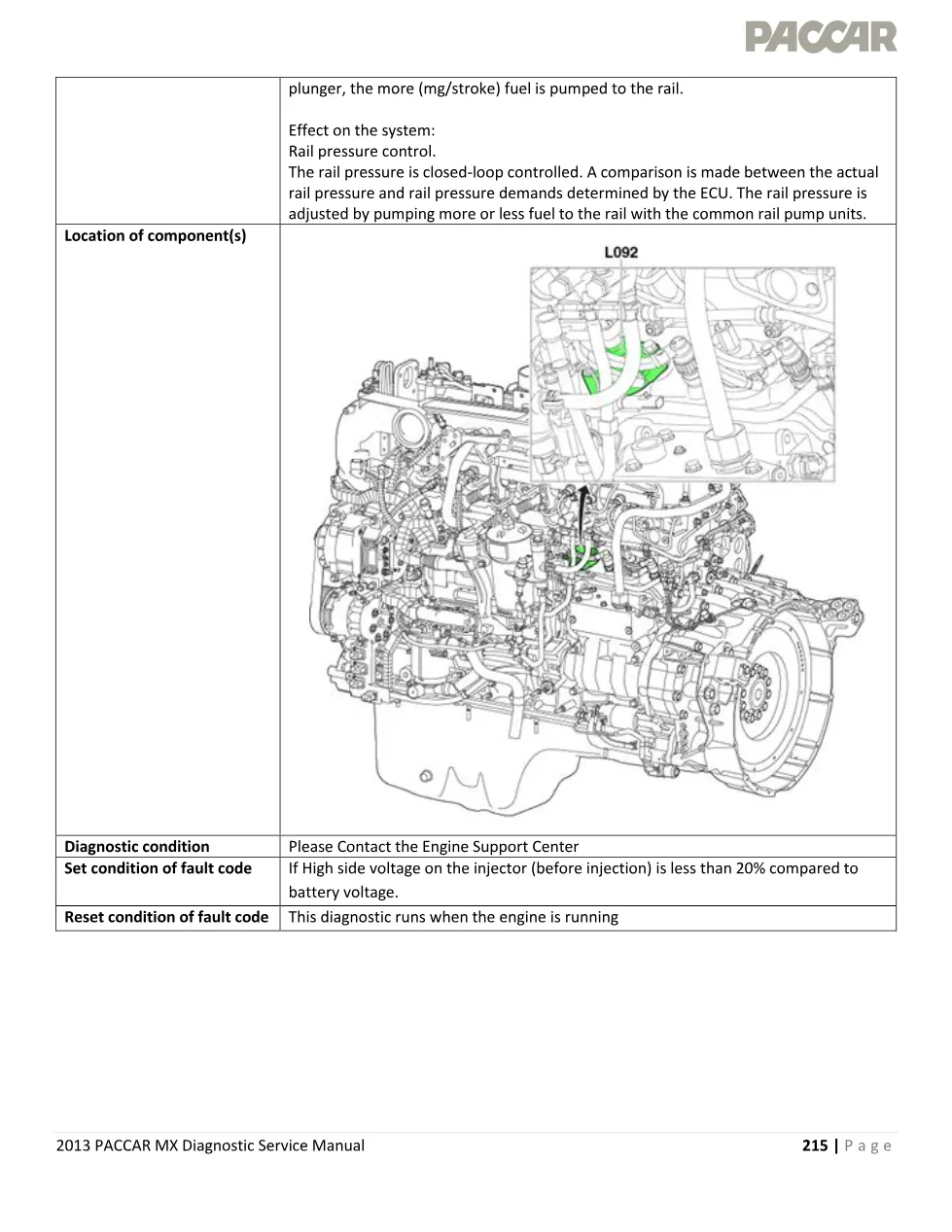
This diagnostic guide applies to PACCAR MX engines equipped with common rail fuel injection systems manufactured in 2013 under EPA2013 emissions regulations. The PACCAR MX P0261 fault procedure covers pump units L092 and L093 and their control circuits via the D420 PCI ECU connector.
Who needs this PACCAR MX P0261 diagnostic manual
Diesel mechanics, workshop technicians, and fleet maintenance managers responsible for PACCAR MX engine diagnostics require the PACCAR MX P0261 manual to accurately troubleshoot fuel system voltage faults and common rail pump circuit failures. This document is essential for diagnosing intermittent electrical issues and verifying repairs using DAVIE scan tool procedures.
The complete PACCAR MX P0261 fault manual is available in the DiagTechPro manuals library. A free account is required to download the full 5-page PDF.
Related manuals library
Sản phẩm liên quan cho hãng này
Cùng brand theo taxonomy hiện có trong catalog WooCommerce.


