
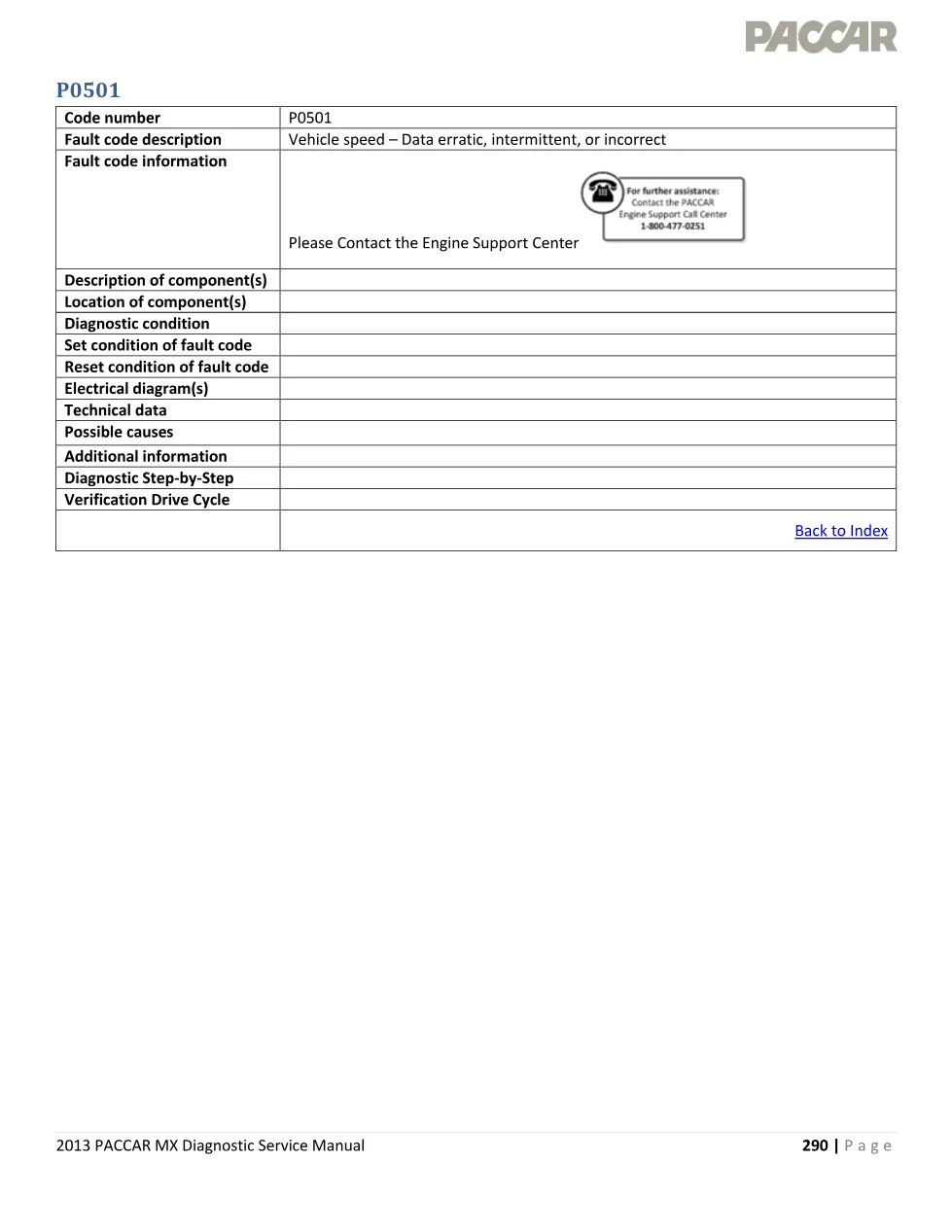
This PACCAR MX engine P0501 diagnostic manual is a one-page technical reference from the 2013 PACCAR MX Diagnostic Service Manual. Published by PACCAR for heavy-duty truck technicians, this document provides fault code identification and diagnostic procedures specific to P0501 vehicle speed data errors on EPA 2013-compliant MX engines.
Document details and specifications — PACCAR MX engine
| Brand | PACCAR |
| Model coverage | MX Engines (EPA 2013) |
| System/Group | DTCs / MX Engines |
| Publication number | Not specified |
| Year/Revision | 2013 |
| Pages | 1 |
| File size | 0.3 MB |
| Format | |
| Language | English |
Table of contents
- Code number P0501
- Fault code description: Vehicle speed – Data erratic, intermittent, or incorrect
- Fault code information and support contact details
- Description of component(s)
- Location of component(s)
- Diagnostic condition
- Set condition of fault code
- Reset condition of fault code
- Electrical diagram(s)
- Technical data
- Possible causes
- Additional information
- Diagnostic Step-by-Step procedure
- Verification Drive Cycle
Applies to these models
This PACCAR MX engine P0501 guide applies to PACCAR MX engines manufactured to EPA 2013 emission standards. The document references the Engine Support Center for detailed fault code investigation. For comprehensive truck engine support, visit PACCAR official.
Who needs this MX engine P0501 manual
Heavy-duty truck mechanics and workshop owners diagnosing vehicle speed sensor faults on PACCAR MX engines need this MX engine P0501 reference. The manual supports technicians troubleshooting erratic, intermittent, or incorrect speed data that triggers fault code P0501 during engine operation or diagnostic scanning.
The complete MX engine P0501 manual is available in the DiagTechPro manuals library. A free account is required to download the full PDF document.
Related manuals library
Using this document effectively
Use PACCAR MX engine P0501 — 2013 Diagnostic Service Manual — PDF, 1 as a reference alongside the exact machine identification, engine family, control module, and publication revision shown on the equipment. Confirm that the model and production range match before following any table, connector view, test sequence, or specification. Record the original fault code and operating conditions before clearing codes or disconnecting components.
Sản phẩm liên quan cho hãng này
Cùng brand theo taxonomy hiện có trong catalog WooCommerce.


