
This Detroit oil pressure derate reference documents fault code SPN 100/FMI 17 (Very Low Oil Pressure) for Detroit DD-series engines across all model years. It reproduces the original TruckFaultCodes.com fault tree, from the first check through the final repair, so the code can be confirmed and worked in the exact order the factory intended. Each step lists the measured value or check and the pass or fail branch that follows, matching the layout used in the source document.
Detroit oil pressure derate troubleshooting overview
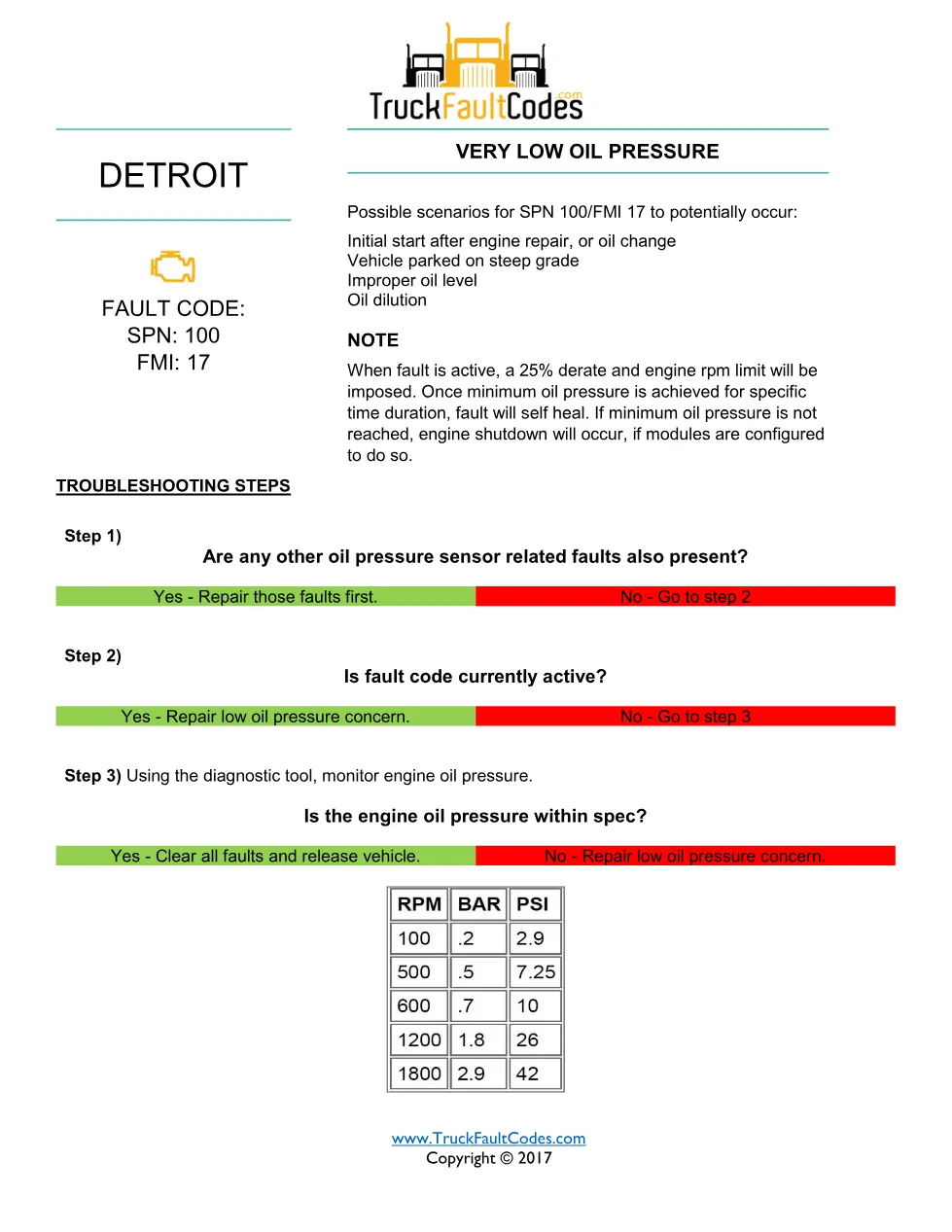
This all-years sheet lists the scenarios that trigger a very-low-oil-pressure code — first start after repair or oil change, parking on a steep grade, improper oil level or oil dilution. It notes the 25% derate and rpm limit, the self-heal once minimum pressure returns, and possible engine shutdown. The steps confirm companion faults, whether the code is active, and monitor pressure against specification. Follow the checks in sequence and verify the repair before clearing the code and releasing the vehicle.
Official document details
| Brand | Detroit |
| Model coverage | Detroit DD-series engines across all model years |
| System / group | DTCs — engine oil pressure |
| Fault code | SPN 100/FMI 17 |
| Source publication | TruckFaultCodes.com (© 2017) |
| Pages | 1 |
| File size | 0.2 MB |
| Format | |
| Language | English |
Document table of contents
- Fault code identification — SPN 100/FMI 17
- Possible scenarios (post-repair start, steep grade, oil level, dilution)
- 25% derate and rpm limit; self-heal behaviour
- Companion oil-pressure fault check
- Monitor engine oil pressure against specification
Applicable truck models
It applies to Detroit DD-series engines across all model years, where the code imposes a 25% derate. Always cross-check the reading against any companion codes before condemning a component. For the official product and service literature, visit the Detroit Diesel website.
Who needs this Detroit oil pressure derate manual
Technicians who need to know why a derate self-heals and when to repair a genuine low-pressure concern. It is written for shop use as a quick, printable reference to keep beside a diesel diagnostic tool during the job.
The full PDF is available in the DiagTechPro manuals library; a free account is required to download.
Related manuals library
Sản phẩm liên quan cho hãng này
Cùng brand theo taxonomy hiện có trong catalog WooCommerce.
Detroit Diesel Reports 6.3

Detroit Reprogramming Station (DDRS) 7.11

DDDL Backdoor Password: A Comprehensive Guide


